Yoga vs Pilates
Low impact exercises for Christians
As Christians, we should be concerned with proper diet and exercise so that the temples of the Holy Spirit are kept in excellent condition, according to 1 Corinthians 6:19 NKJV, which reads:
“Or do you not know that your body is the temple of the Holy Spirit who is in you, whom you have from God, and you are not your own?”
From taking walks to weightlifting, a believer can find many avenues to live out this scripture. One common indicator of a workout well done is a t-shirt drenched in sweat for many people; however, with Pilates or yoga as one’s chosen form of exercise, that particular side-effect is not a problem. There has been a surge in the number of people practising Pilates, especially in 2025, when social media apps like TikTok have popularised the exercise.
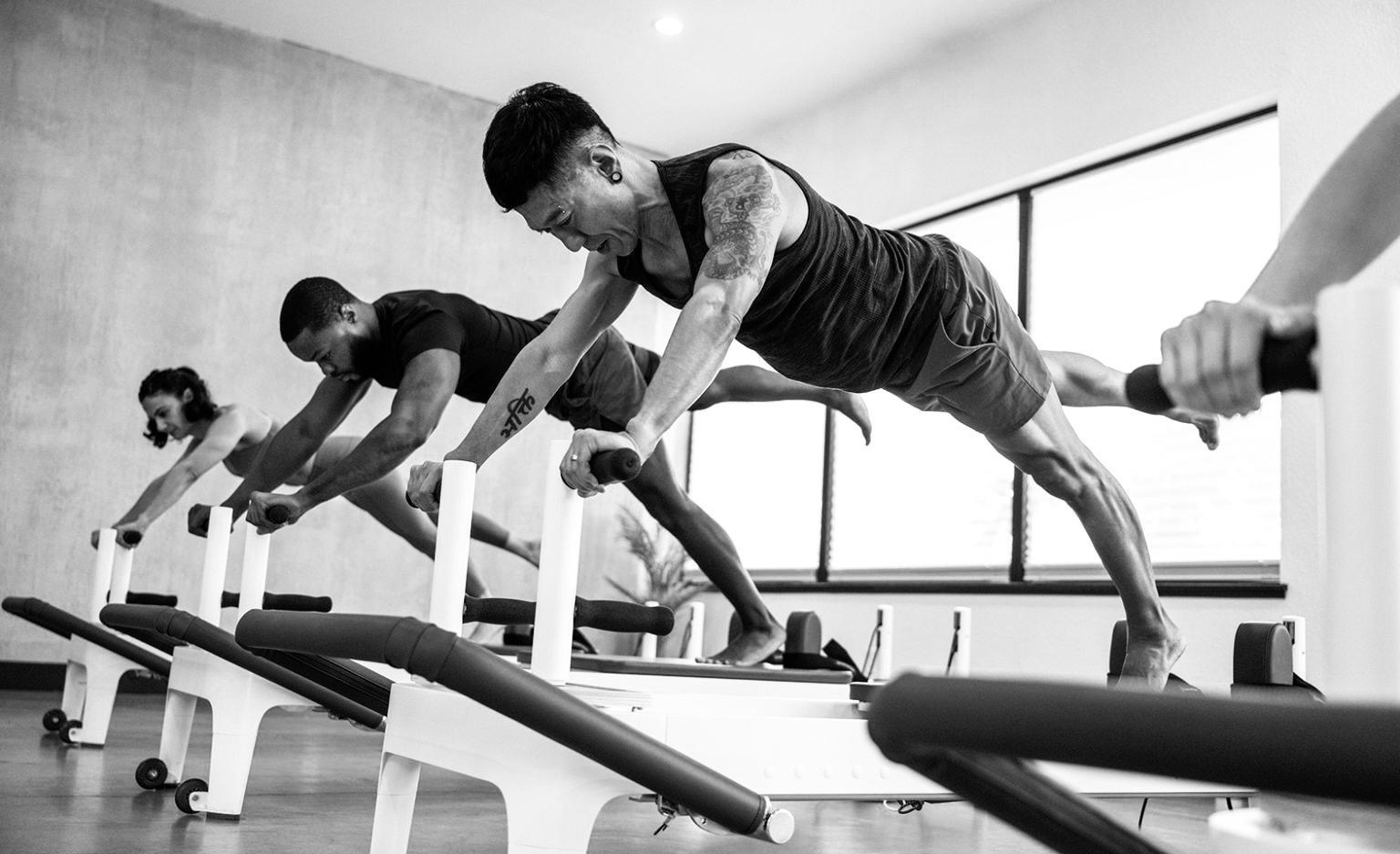
Pilates is described as a mind-body exercise, a low-impact form of exercise, and is often compared to the practice of yoga. There have been debates about the practice of yoga due to its origin and whether the practice is an ideal form of exercise for a Christian. By looking at both the spiritual and physical elements of both modes of exercise, a believer can be equipped with the wisdom necessary to mix up their wellness routines.
What is Pilates?
Pilates was born out of the personal plight of a boy called Joseph Pilates in Germany, early 20th century (1880-1967). As a result of health complications, he worked on improving his body. He aimed to improve his own health by studying disciplines that focused on the mind and body, and ultimately succeeded, as he grew stronger, more flexible and healthier. The name Pilates was later born when he introduced it in America as a way to help the injured athlete make their return to exercise.
The practice focuses on the core muscles, which aid in balancing the body and are vital to giving support to the spine and internal organs. By honing in on the awareness of one’s breath and alignment of the spine, Pilates aims to strengthen the deep torso muscles. Pilates can function as both an aerobic and a non-aerobic workout. There is an emphasis on the participant’s concentration and focus, due to the need to move the body through exact ranges of motion.
Here are some physical benefits of Pilates:
- Stress management and relaxation – research has shown that Pilates has positive effects on psychological symptoms, such as anxiety and depression.
- Improved flexibility – muscles are utilised in a way that they are strengthened, lengthened and engaged. This type of tension promotes flexibility, important for minimising injury and better movement overall as one ages.
- Improved posture – in engaging the core muscles (the abdominals, back and pelvic floor), the relaxation of the shoulders and neck is induced, which in turn alleviates pressure on hips, legs and feet, improving posture
- Improved concentration – Pilates can boost cognitive function, as concentration is a key part of performing movements correctly.
What is yoga?
Yoga’s history spans back 5000 years, with its first mention appearing in the Rigveda – known as an ancient collection of Indian texts associated with Hinduism. The principles of yoga also morphed into other countries, cultures and religions like Buddhism. Like Pilates, it also prioritises the connection between mind and body through the combination of three elements: movements/postures, breathing and meditation.
There are many forms of yoga as a physical practice; therefore, the philosophies and origins do not pinpoint to one singular ideology.
One concept which is focused on in yoga is ‘pure consciousness’, the aim being that people would connect to this through its practice. Another aspect adopted in yoga is the belief in chakras, the belief being that there are centres of energy within the human body. The physical exercises (asanas) and breathing disciplines (pranayama) operate as doors to spiritual realms, where connections and revering of deities are brought about through yoga postures that represent what the deity stands for.
In essence, the yoga positions are acts of worship; a spiritual transfer taking place where the practitioner embodies the personality traits of the spiritual entities being worshipped.
3 of the positions in yoga and the ‘god’ it worships are as follows:
- The Lotus Pose (a seated position where the person usually rests their hands on their knees): the position aims for one to become one with a divine essence called Brahman, who is meant to depict a ‘cosmic level of consciousness’
- The Tree Pose (a standing position, with one foot placed on the leg and prayer hands): believed to be a devotion to the goddess Sita. This pose is meant to encourage participants to envision themselves as the goddess Sita and a tree
- The Dancer Pose (a standing position, with one foot held onto for balance and one arm stretched out): a pose honouring the god Shiva, who oversees the ‘Cosmic Dance,’ – the process of reincarnation and destruction and manifestation of the universe
Many more poses and positions serve a plethora of gods and goddesses that many participants worshipped unbeknownst; the mere utterance of ‘namaste’ meaning ‘the divine in me salutes the divine in you.’
Although quite similar to Pilates, here are some physical benefits of yoga:
- Improved strength, balance and flexibility – the holding of poses alongside slow movements and deep breathing increase blood flow and warm up muscles
- Improved heart health – the regular practise has been known to reduce stress and body inflammation which contributes to good heart health
- Improved sleep – research has said it has improved how quickly someone can fall asleep and also determine how deep their sleep can be
What should a Christian go for Pilates or yoga?
The word yoga itself is a Sanskrit word translated as “yoke” or “union”. Yoga has been described as a ‘meditative process of self-discovery and liberation,’ but the meaning of the word itself contradicts this fact. Through the positions, there is meant to be yoking between the participant and god. A yoke is a wooden bar or frame by which oxen or other animals are joined by their heads or neck, typically used for the ploughing of fields. A Christian is not to be yoked to anything but Jesus, as seen in Matthew 11:29-30 NKJV:
“Take My yoke upon you and learn from Me, for I am gentle and lowly in heart, and you will find rest for your souls. For My yoke is easy and My burden is light.”
Any and every stress of life can be relieved when we choose to go to Jesus, who gives us ultimate rest and burdens that will not weigh us down. Hebrews 12:1-2 further instructs the believer to ‘run the race with endurance’ and ‘lay aside every weight,’ the following of which would be made easier if no other burden or yoke would cause us to drag our feet.
In the pursuit of ‘pure consciousness’ advocated for through yoga, we are brought back to the fall of man in Genesis 3, the whisperings of the serpent causing the yoga devotee to open their ‘eyes’, and many other gateways to demonic tampering.
Delving into the differences in origin between the two exercises, it is apparent that the philosophies of an exercise matter.
1 Corinthians 10:21 NKJV states:
“You cannot drink the cup of the Lord and the cup of demons; you cannot partake of the Lord’s table and of the table of demons.”
Dabbling in anything that would cause us to partake of the table of demons should be rejected by Christians.
The book ‘How to Set the Captives Free,’ by Dr Rebecca Brown, contains a lot of information for a Christian to be informed on keeping certain doors closed. The book states:
‘Satan’s goal is to teach humans to regain conscious control of their spiritual bodies. Many do. Once this is achieved, these people can perceive the spirit world as well as the physical world. They can talk with demons, leave their physical bodies with their spirit bodies, and with full consciousness, go places and do things with supernatural power.”
Going back to Genesis 3 again, this sort of spiritual independence ‘kicks’ the believer out of the presence of God. Outside of this presence, ex-yoga practitioners have testified to experiencing constant anxiety, confusion, spiritual vulnerability and sickness.
From the similarities and differences listed, it is clear that discernment is vital even when it comes to how one chooses to keep fit. So before you think to do another ‘downward dog,’ think about whether it honours 1 Corinthians 10:31 NKJV, which reads:
“So, whether you eat or drink, or whatever you do, do all to the glory of God.”
Although the philosophies behind Pilates seem innocent enough, it is still important to use discernment and wisdom before implementing them. Although the practice was born in a recent age and out of the personal vendetta of Joseph Pilates, his development of Pilates also involved looking into the practice of yoga.
The adoption of New Age practices has seeped into activities, requiring heightened spiritual discernment from the Christian in this day and age. It would be wise that if one were to opt for Pilates, that the philosophies and beliefs of the Pilates instructor are scrutinised.
If the reader of this article is a born-again believer and follower of Jesus Christ, but also practises yoga, take note of the following scriptures:
“You shall have no other gods before Me.”
~ Exodus 20:3 NKJV
“Do not be unequally yoked together with unbelievers. For what fellowship has righteousness with lawlessness? And what communion has light with darkness? And what accord has Christ with Belial? Or what part has a believer with an unbeliever? And what agreement has the temple of God with idols? For you are the temple of the living God. As God has said:
“I will dwell in them
And walk among them.
I will be their God,
And they shall be My people.”
Therefore
“Come out from among them
And be separate, says the Lord.
Do not touch what is unclean,
And I will receive you.”
“I will be a Father to you,
And you shall be My sons and daughters,
Says the Lord Almighty.”
~ 2 Corinthians 6:14-18 NKJV
For those who are not believers in Jesus Christ and practice yoga, it is important to understand that spiritual practices apart from Christ ultimately do not lead to true fulfilment. Turn away from belief in these deities and understand that there is one true God – Jesus.
If you would like to become a believer in Christ and experience unfiltered, eternal and unconditional love, pray this simple prayer:
“Lord, I confess my sins and ask for Your forgiveness. I turn from my ways and choose to follow You. Please help me live a life that is pleasing to You. Amen.”
Ultimately, staying fit is important—but the way one chooses to stay fit is just as significant.
Other Articles

The most prolific criminal case of the year has finally come to an end as P. Diddy...

On June 27th Congo and Rwanda signed a peace deal that aimed to end decades of conflict...

The marketplace today is often viewed as a place lacking integrity and purpose...
From the overflow of Upper Room 2025, all roads led to Kingdom Ambassadors Centre...

Delite Hair Care provides all essentials for a complete hair care routine, for all ages...

It is a very well-known verse; David’s contemplation of how God wove him in his mother’s...