WHAT THE RISING UK TAX MEANS FOR ENTREPRENEURS
BALANCING BOOKS AND OUR BELIEF:
The financial terrain in the United Kingdom is shifting rapidly, pressing in on business owners across every sector. Inflation is rising. Employer costs are surging. And for many entrepreneurs, the question is no longer how to grow, but how to survive. But for Kingdom entrepreneurs, this moment is not a death sentence. It is a divine summons. A call to stand in faith, move in wisdom, and take charge of the territory God has entrusted to them.
The Economic Climate: Pressure From Every Side
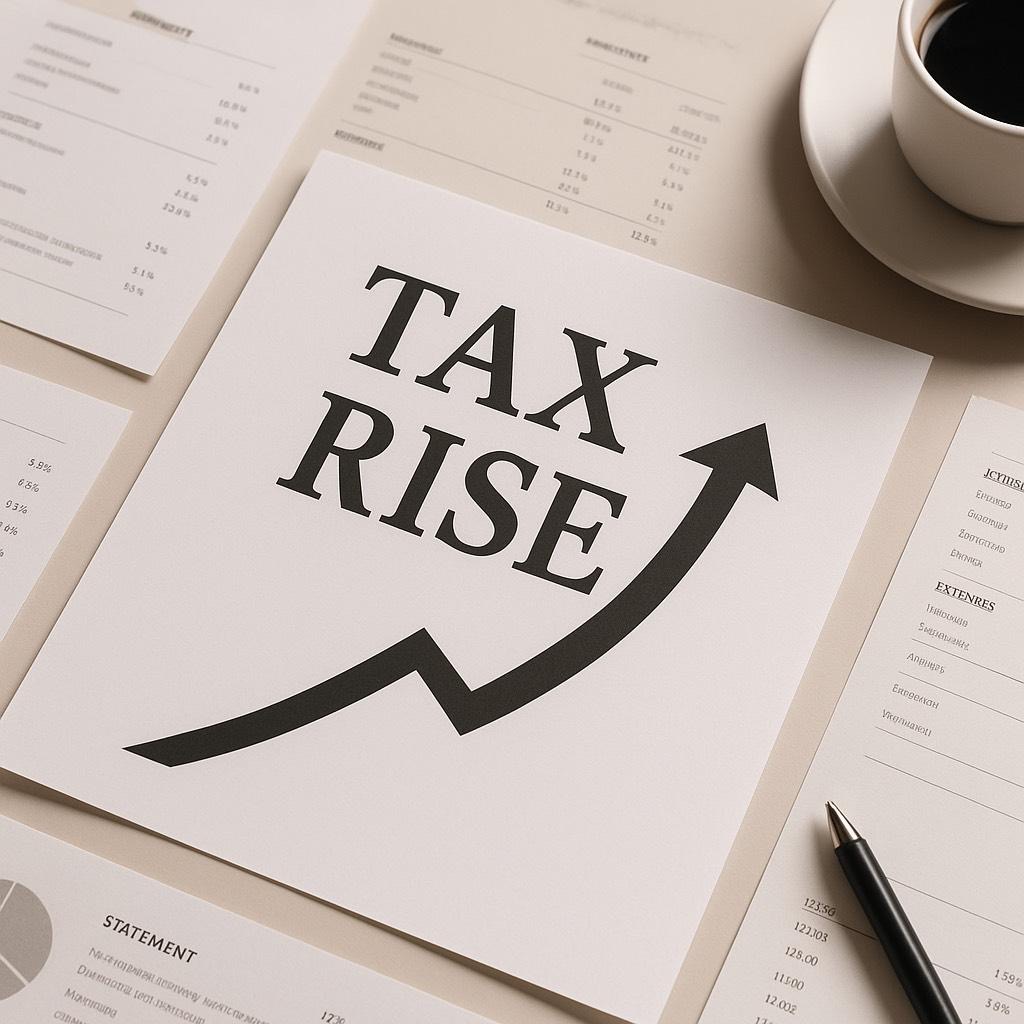
In April 2025, the UK government raised employer National Insurance contributions from 13.8% to 15% while lowering the secondary threshold from £9,100 to £5,000. This has created a heavier tax burden for small business owners and a tightening squeeze on employment and operations. This is especially challenging for entrepreneurs who are already navigating a cost-of-living crisis, rising inflation and slowed investment.
For many UK businesses, this has meant tough decisions. Data released in July 2025 shows over 100,000 employees dropped off payrolls between April 2025 and June 2025. A further 13% of businesses have already made job cuts, and 19% are actively considering redundancies. Confidence in the market is fragile. Investment is slowing. And for many small and mid – sized enterprises, tax has become their number one concern.
According to HMRC, this policy shift is expected to generate an additional £5.3 billion annually in tax revenue, but the cost to business is very significant. For companies with ten employees on average salaries, this change could result in over £8,000 in new tax liabilities each year.
“Tax is now the top concern for SMEs,” said a London based business consultant. Margins are thinner, and any additional cost – even 1% – adds up quickly when multiplied across a team”
Policy Backdrop and Political Context
The NIC hike comes as part of the government’s wider efforts to reduce the national deficit, which skyrocketed to £136 billion during the 2023–2024 fiscal year due to public spending on energy subsidies, NHS expansion, and infrastructure commitments. The Office for Budget Responsibility (OBR) has warned that without significant tax revenue increases, future borrowing could exceed 3% of GDP annually, a threshold that risks destabilising the UK’s credit rating.
Chancellor Isla Khan defended the NIC adjustment in her Spring Statement, saying:
“This measure ensures that the cost of public services is shared more evenly and sustainably, particularly as wages rise and businesses return to profitability.”
However, business leaders argue that profitability is not recovering evenly particularly among local service-based businesses, hospitality providers, and trade professionals, where margins remain extremely thin.
Many warn that the timing of the hike could impact recovery efforts just as businesses are emerging from pandemic-era losses and adjusting to post-Brexit trade complexities. According to a recent report by the Federation of Small Businesses (FSB), over 50% of small firms say rising tax obligations are now their primary barrier to growth, surpassing inflation and energy costs.
Critics have also expressed concern that the added pressure could discourage job creation, widen regional economic disparities, and lead to long-term stagnation among the very enterprises that form the backbone of the UK economy.
A Kingdom Response: Strategy, not Survival
Faith based business owners are being encouraged to lead with both spiritual conviction
and financial clarity. Strategic planning is not foreign to us. This is a Biblical mandate, one that we have been very accustomed to. Proverbs 21:5 echoes to us “The plans of the diligent lead surely to plenty”. Planning when guided by faith is not just wisdom. It is worship.
Advisors within Christian networks are urging business owners not to panic, but to pray, plan, and pivot wisely in response to rising costs.
Experts advise business owners to:
- Reassess financial health and cash flow with honesty
- Streamline operations and reassess staffing structures
- Seek wise counsel before major decisions
- Incorporate purpose driven frameworks in crisis planning
While the economic picture appears bleak, for Christian entrepreneurs, these systematic pressures aren’t just economic, they can be conceived as spiritual tests of integrity, stewardship and faith.
“We’re not just preserving profit, we’re preserving purpose” says Daniel Adeyemi, founder of a Christian business network based in Birmingham, “Our principles don’t fluctuate with the markets.”
Conclusion: Holding Firm in a Rocky Landscape
As the cost of doing business in the UK continues to rise, entrepreneurs are being challenged to navigate the economic landscape with resilience, strategy, and clear priorities.
The NIC increase is just one of many pressures forcing businesses to reassess their models and strengthen their foundations. For Christian entrepreneurs, that foundation includes Biblical values such as integrity, diligence, and stewardship. While margins may tighten and forecasts fluctuate, the call is to build with wisdom. As the tax burden rises, many are being reminded that faith and foresight are not opposites. Instead, they are twin pillars for sustainable growth. Even in the most uncertain times.
Balancing books and belief is not always easy, but in moments like this, it becomes more necessary than ever.
Other Articles

The most prolific criminal case of the year has finally come to an end as P. Diddy...

On June 27th Congo and Rwanda signed a peace deal that aimed to end decades of conflict...

The marketplace today is often viewed as a place lacking integrity and purpose...

From the overflow of Upper Room 2025, all roads led to Kingdom Ambassadors Centre...

Delite Hair Care provides all essentials for a complete hair care routine, for all ages...

It is a very well-known verse; David’s contemplation of how God wove him in his mother’s...