
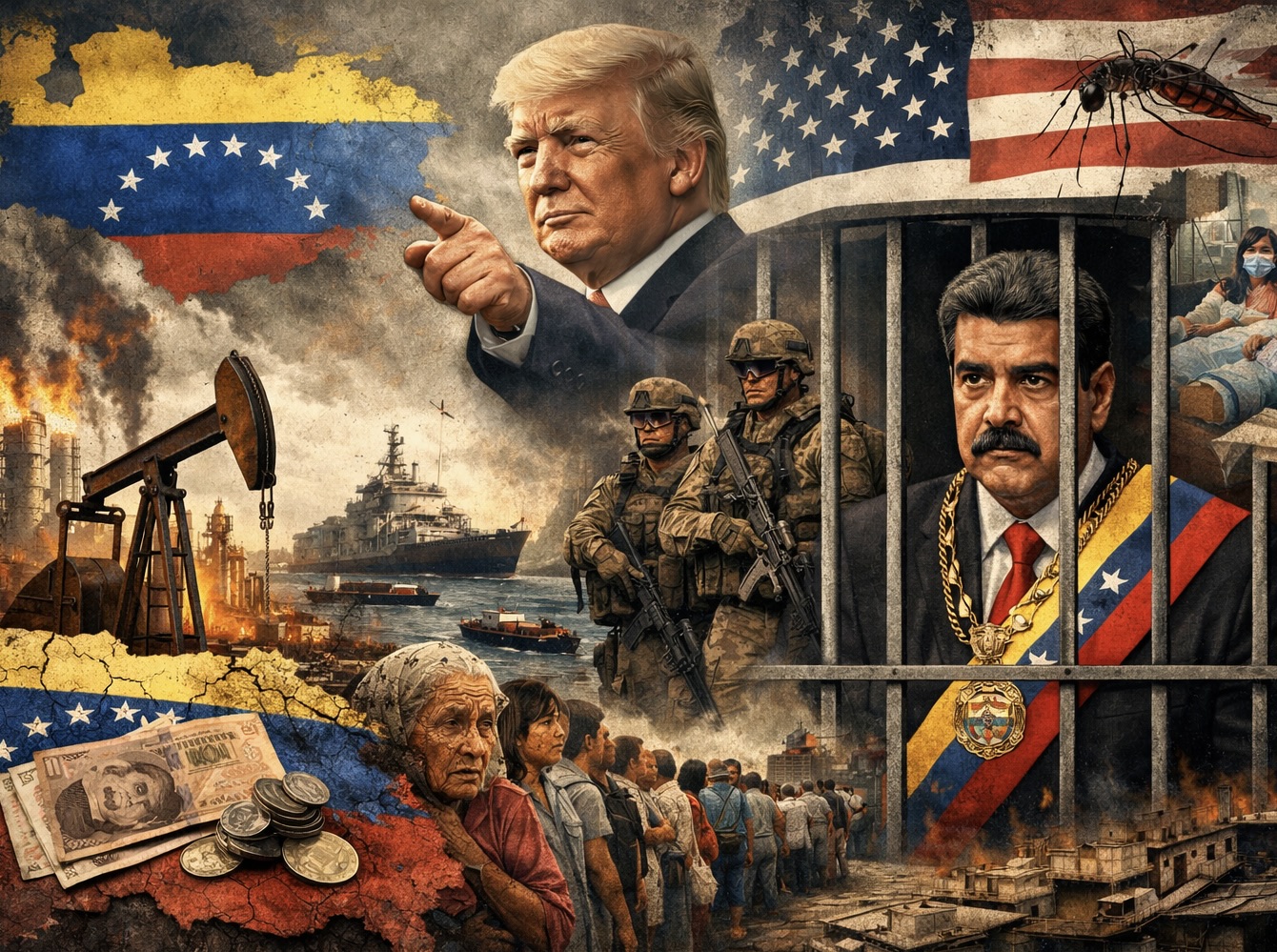
Venezuela’s Oil, Economic Collapse, and the Role of the United States
How Oil Dependence and U.S. Policy Shaped Venezuela’s Economic Crisis
Venezuela was once one of the wealthiest countries in Latin America, largely because of its vast oil reserves. For decades, oil exports funded public services and made the country a key energy supplier to the United States, which was one of Venezuela’s largest oil buyers. Today, Venezuela is facing one of the most severe economic collapses in modern history.
According to the Economics Observatory, living standards in Venezuela fell by around 74% between 2013 and 2023. This dramatic decline did not happen suddenly. It was the result of long-term economic mismanagement, growing corruption, and an over-reliance on oil, later compounded by international sanctions. During the 2000s, President Hugo Chávez benefited from high global oil prices. His government borrowed heavily and sharply increased public spending, funding social programs and subsidies. However, little was saved for the future, and the economy was not diversified beyond oil. When oil prices fell and production declined due to mismanagement and underinvestment in the state oil company, PDVSA, government revenues collapsed. After Chávez’s death in 2013, President Nicolás Maduro inherited a fragile economy. Instead of reversing course, his government continued policies that discouraged private investment and relied on printing money to cover deficits. This led to hyperinflation, shortages of food and medicine, rising poverty, and mass emigration. Maduro and his socialist government are widely blamed for worsening the crisis, though he argues that Venezuela is the victim of an “economic war” led by the United States and Europe.
U.S. pressure increased significantly under President Donald Trump. Beginning in 2019, the Trump administration imposed strict sanctions on PDVSA, freezing assets and cutting Venezuela off from U.S. financial systems and oil markets. These sanctions aimed to pressure the Maduro government over corruption, human rights abuses, and disputed elections. While most economists agree that Venezuela’s economic collapse began before sanctions were imposed, the measures severely limited the country’s ability to earn foreign currency, deepening the crisis.
The economic breakdown has also produced serious human costs. Venezuela, which was certified malaria-free in 1961, has seen a resurgence of the disease in recent years. At least 10 of the country’s 24 states now report malaria cases, reflecting the collapse of public health services and years of medicine shortages. Although reports suggest that shortages of anti-malarial drugs have recently declined, the return of preventable diseases highlights the broader deterioration of basic services.
Looking ahead, U.S. policy toward Venezuela appears focused on reshaping the oil sector as a path to economic recovery. Washington has signalled that easing sanctions and restoring oil trade could depend on political reforms and opening the oil industry to foreign investment. Whether this strategy leads to stability or further unrest will depend on Venezuela’s ability to rebuild institutions, reduce corruption, and manage its oil wealth more responsibly than in the past.
Other Articles

The most prolific criminal case of the year has finally come to an end as P. Diddy...

On June 27th Congo and Rwanda signed a peace deal that aimed to end decades of conflict...

The marketplace today is often viewed as a place lacking integrity and purpose...

From the overflow of Upper Room 2025, all roads led to Kingdom Ambassadors Centre...

Delite Hair Care provides all essentials for a complete hair care routine, for all ages...

It is a very well-known verse; David’s contemplation of how God wove him in his mother’s...