
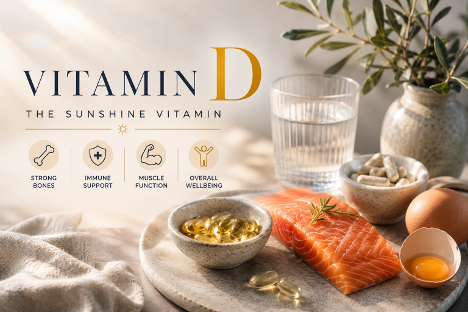
Vitamin D: The Sunshine Vitamin and Its Vital Role in Health
Vitamin D is often referred to as the “sunshine vitamin,” yet despite its importance, deficiency remains one of the most common nutritional concerns worldwide. Up to 50% of the UK population has low vitamin D, and while many people associate vitamin D only with bone health, its influence extends far beyond this. Modern lifestyles, reduced sun exposure, darker winters, indoor working environments, and dietary habits have all contributed to increasing rates of vitamin D deficiency, particularly in countries with limited sunlight.
What Is Vitamin D?
Vitamin D is a fat-soluble vitamin that the body naturally produces when the skin is exposed to sunlight, specifically ultraviolet B (UVB) rays. It can also be obtained from certain foods and supplements. Unlike most vitamins, vitamin D functions more like a hormone, helping regulate calcium and phosphate levels in the body. These minerals are essential for healthy bones, teeth, muscles, and nerves.
Roughly 24% of men and 22% of women in the UK are clinically deficient (Vitamin D value below 25nmol/L).
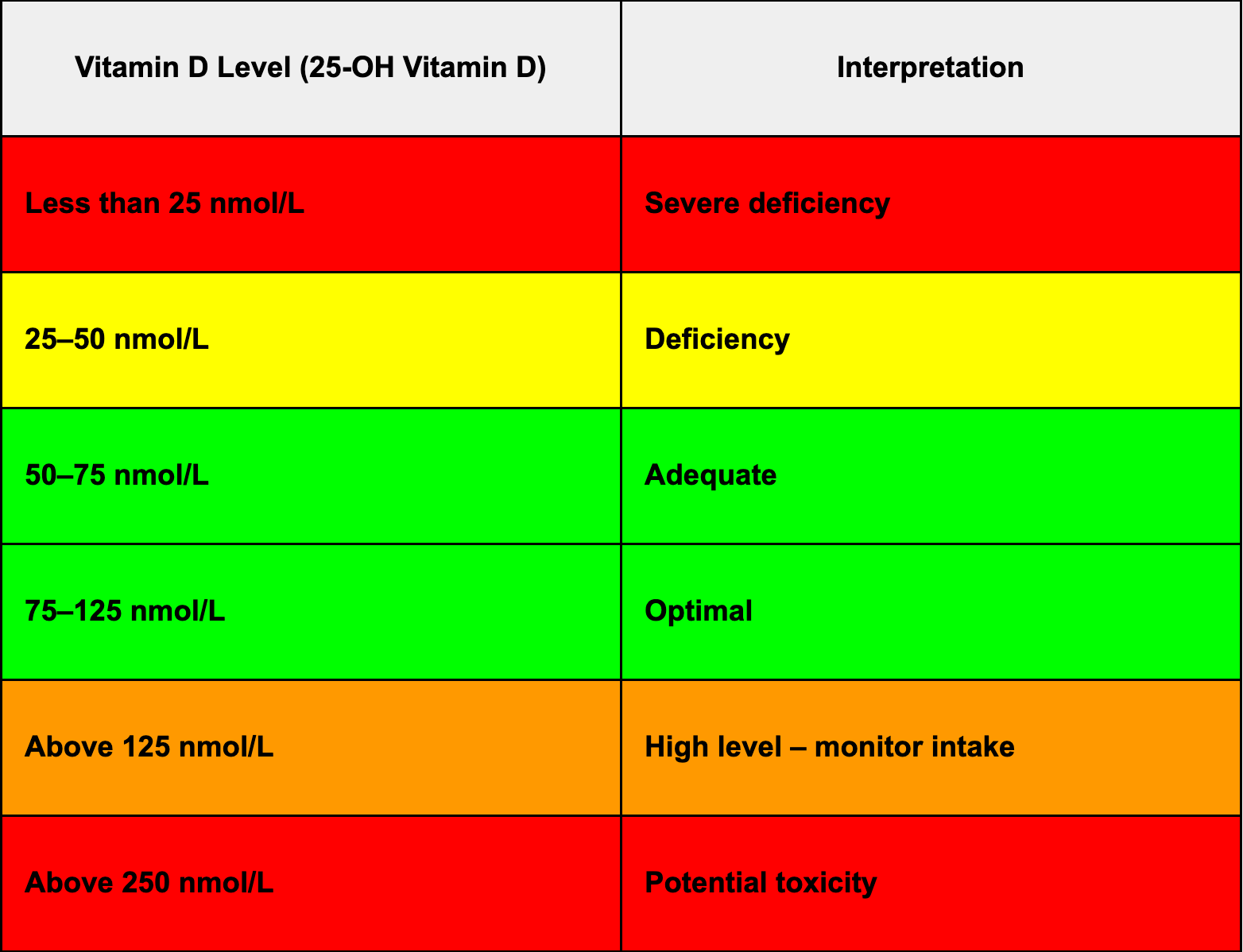
Table 1: Vitamin D levels
Vitamin D and Bone Health
One of vitamin D’s most well-known functions is supporting strong and healthy bones. Without enough vitamin D, the body cannot properly absorb calcium from food. Over time, this can weaken bones and increase the risk of several conditions.
Osteoporosis
Vitamin D deficiency is strongly linked to osteoporosis, a condition where bones become fragile and more likely to fracture. According to the osteoporosis foundation, 78.3% of women (especially those in the post-menoposal stage) have the conditions, whilst for men the percentage is 21.7%. Adequate vitamin D levels help maintain bone density and reduce fracture risk.
Osteomalacia and Rickets
In adults, severe vitamin D deficiency can lead to osteomalacia, which causes bone pain and muscle weakness. In children, deficiency may result in rickets, a condition that affects bone development and growth. However, in both adults and children the likelihood is very low. In adults, for example, osteomalecia is very rare, clinically confirmed cases rage between 0.1% to 0.2%.
Arthritis and Rheumatological Conditions
Emerging research also suggests that vitamin rheumatoid arthritis (RA) presented D may play a supportive role in reducing inflammation associated with certain rheumatological conditions, including rheumatoid arthritis. Up to 84% of RA patients show deficient serum of vitamin D compared to 34% of healthy individuals. While vitamin D is not a cure, maintaining healthy levels may contribute to improved joint and muscle function.
Skin Health
Healthy vitamin D levels may support skin repair and immune defence within the skin. Some studies suggest that vitamin D may help manage inflammatory skin conditions such as eczema, psoriasis, and acne, although more research is still ongoing.
Immune System Support
Vitamin D contributes to normal immune system function. Deficiency in vitamin D, is associated with increased autoimmunity (when the body attacks its own cells) and increased susceptibility to infections. During the COVID-19 pandemic, public awareness of vitamin D increased significantly, particularly regarding its role in immune resilience and respiratory health.
Muscle Function and Energy
Low vitamin D levels are often associated with fatigue, muscle aches, weakness, and low mood. Patients with deficiency frequently report improved energy and wellbeing after treatment.
Why Vitamin D Deficiency Is Common in Certain Countries
Geography has a major impact on vitamin D levels. Countries in Northern Europe, including the UK, experience long winters and limited sunlight, making it difficult for the body to produce enough vitamin D naturally. Studies suggest that around 1 in 5 people in the UK have low vitamin D levels, with the prevalence increasing during the winter months and among people with darker skin tones.
Modern lifestyles also contribute to deficiency, as many people spend more time indoors and use sunscreen regularly. Individuals with darker skin tones may also require more sun exposure because higher melanin levels reduce vitamin D production. In a recent study from Northern Britain, 72% of adults with darker skin tones and 55% of older adults had insufficient or deficient vitamin D levels, even during summer.
African countries and other sunny regions generally receive more year-round sunlight, which supports natural vitamin D production. However, vitamin D deficiency can still occur due to indoor lifestyles, urbanisation, clothing practices, and limited outdoor activity.
While sunlight is beneficial, excessive exposure can increase the risk of skin ageing and skin cancer, so balance is important.
Dietary Sources of Vitamin D
Vitamin D can also be obtained from foods such as:
- Oily fish like salmon, sardines, and mackerel
- Egg yolks
- Liver
- Fortified cereals and dairy products
- Vitamin D supplements
For many people, especially during winter, diet alone may not provide enough vitamin D, so should people take supplements?
In the UK, vitamin D supplements are often recommended during autumn and winter, particularly for:
- Older adults
- Pregnant and breastfeeding women
- People with limited sun exposure
- Individuals with darker skin tones
- Care home residents
- People who cover most of their skin outdoors
Other Articles

The most prolific criminal case of the year has finally come to an end as P. Diddy...

On June 27th Congo and Rwanda signed a peace deal that aimed to end decades of conflict...

The marketplace today is often viewed as a place lacking integrity and purpose...

From the overflow of Upper Room 2025, all roads led to Kingdom Ambassadors Centre...

Delite Hair Care provides all essentials for a complete hair care routine, for all ages...

It is a very well-known verse; David’s contemplation of how God wove him in his mother’s...