
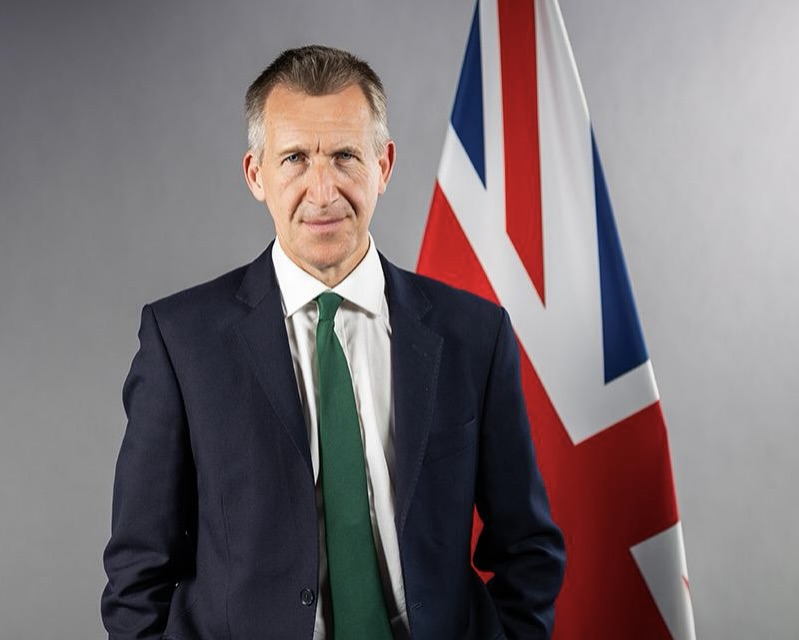
UK Defence Shake-Up as Jarvis Takes Over Top Role
Leadership change at the Ministry of Defence draws political scrutiny amid rising global security tensions and questions over government stability.
The UK government has made a change in its Ministry of Defence leadership, with Al Carns stepping down and Dan Jarvis appointed as the new Defence Secretary. The development comes at a time when defence policy, military readiness, and global security concerns are increasingly prominent in British politics.
Prime Minister Keir Starmer is also facing closer scrutiny as the reshuffle places attention on how the government is managing senior positions in key departments. Even routine ministerial changes tend to attract political interest when they involve areas as sensitive as national defence.
This change forms part of a broader government reshuffle within the Ministry of Defence. In simple terms, a reshuffle is when ministers are moved, replaced, or reassigned within government. In this case, the Defence Secretary role has changed hands while the department continues its day-to-day responsibilities without interruption. These changes can happen for several reasons, including resignations, internal government decisions, performance adjustments, or strategic reorganisation depending on priorities at the time.
Dan Jarvis, who now takes over as Defence Secretary, is widely recognised for his combination of military background and political experience. This gives him familiarity with both operational defence matters and government decision-making processes. His responsibilities include overseeing the UK’s armed forces, managing defence policy and spending, and contributing to national security strategy. Because the Ministry of Defence is one of the most important departments in government, leadership changes at this level are closely watched by both political observers and the public.
Although reshuffles are a normal part of UK politics, this particular change is drawing more attention due to the current global context. International tensions remain high, and defence spending and military preparedness are ongoing topics of debate. As a result, any change in leadership within defence is often interpreted as politically significant, even when it is part of routine government management.
Public and political reactions have reflected this sensitivity. Some critics view the change as a sign of instability or uncertainty within government decision-making, particularly around defence priorities.
Others argue that it is a practical and necessary adjustment designed to strengthen leadership and ensure the department is led by someone with relevant experience. Both perspectives highlight how closely defence policy is tied to public confidence in government performance. Moving forward, attention will focus on how quickly Dan Jarvis settles into his new role and whether the change leads to any shifts in defence strategy or spending priorities. There will also be continued interest in whether this reshuffle is an isolated adjustment or part of a wider pattern of government changes.
Overall, while the reshuffle itself is a standard feature of UK politics, its timing and the importance of the defence portfolio have given it greater significance. It reflects the ongoing challenge for government leadership in balancing political stability with rapidly changing global security demands.
Other Articles

The most prolific criminal case of the year has finally come to an end as P. Diddy...

On June 27th Congo and Rwanda signed a peace deal that aimed to end decades of conflict...

The marketplace today is often viewed as a place lacking integrity and purpose...

From the overflow of Upper Room 2025, all roads led to Kingdom Ambassadors Centre...

Delite Hair Care provides all essentials for a complete hair care routine, for all ages...

It is a very well-known verse; David’s contemplation of how God wove him in his mother’s...