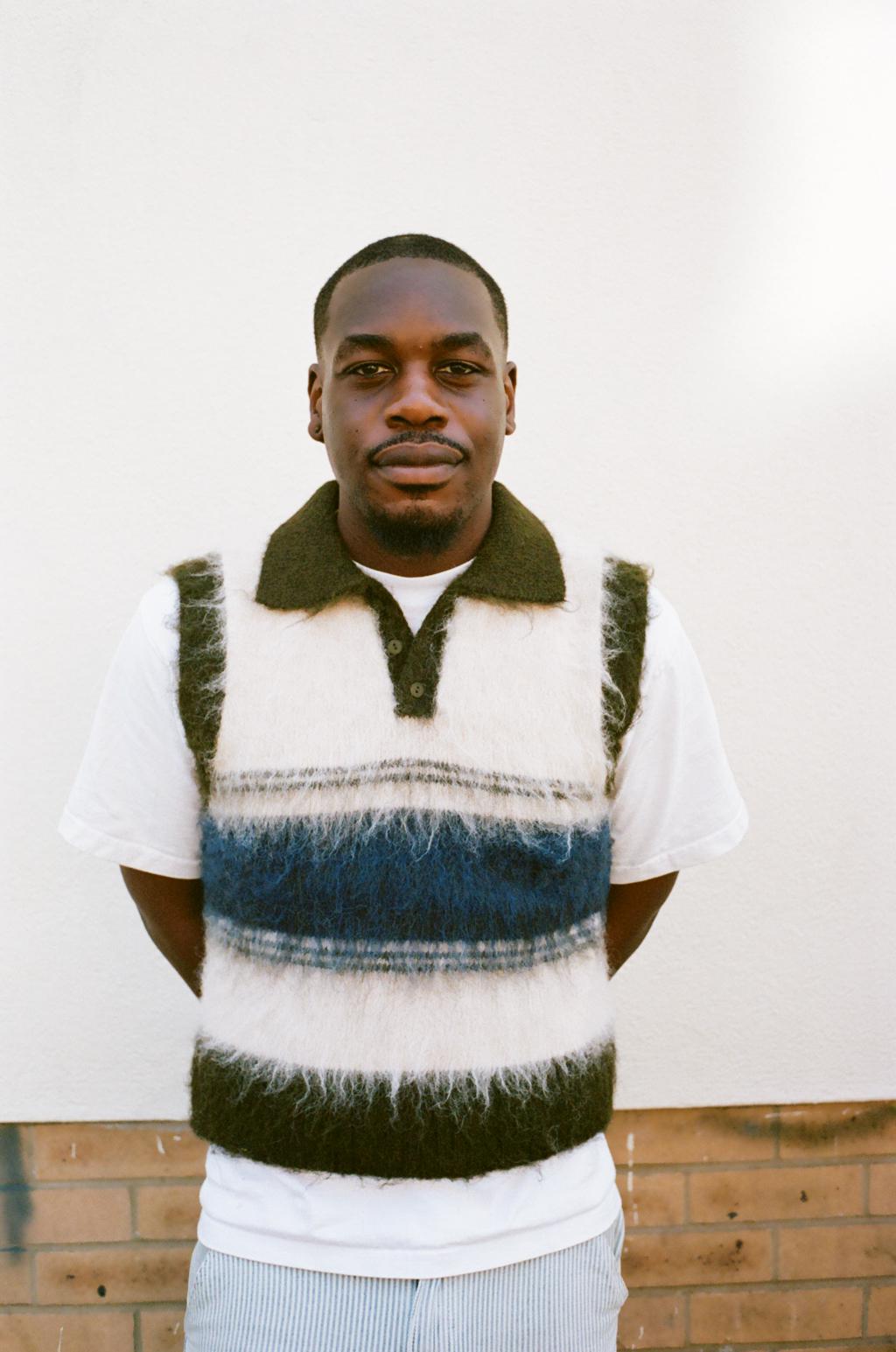
“Justice Should Be a Lived Reality”: How Faith Took Emmanuel Onapa from Hackney Streets to the Council Chamber
Award-winning journalist, community organiser, and newly elected Green Party councillor Emmanuel Onapa speaks candidly about growing up in a working-class household, finding Christ, and why his faith compels him to challenge power in Hackney and beyond.
From Church Pew to Community Stage
Emmanuel Onapa did not grow up with a burning sense of political vocation. He grew up in church, dragged along by his mother, frustrated by educational institutions, and quietly at odds with almost everyone in his school. “I always grew up in church,” he recalls, “but I never had a personal relationship with Christ. I was being forced to wake up and go with my mum, and I would often get into conflict with other children. But my biggest troubles took place in mainstream education.”
Raised in a working-class, single-parent household in Chingford, Emmanuel was expelled and sent to a referral unit in year 8. He attended another school in the local area, which expelled him again after a few months. His mother, a woman of determined faith and fierce ambition for her son, sent him back home to Uganda while she worked tirelessly to fund a place at an international private school at £1,500 a term. “As a young Black man in London, there was no room for grace within the education system for me at the time,” he says. “My mum really wanted to avoid the pull of gang life — it was real for a lot of my friends growing up, and the school-to-prison pipeline showed no mercy on them.”
Emmanuel eventually returned to the UK after his time in Uganda — where he was also kicked out of one school and had to attend another. He arrived at Haringey Sixth Form College in Tottenham, then B-Six Sixth Form in Hackney. His habits were largely unchanged, but there was a growing sense that something needed to shift. What did shift was the discovery of a programme that would rewire how he saw the world. “The Knowledge is Power education programme radicalised me — in the best sense,” he says. “It made me understand what it actually means to be Black in London… The systemic structures behind what I was living,” he says. His mind was shaped by the likes of Walter Rodney who explored how Europe underdeveloped Africa. Emmanuel continues, reflecting on his current environment: “Honestly, it reminds me of KAC’s Kingdom School, which is way more intense. And the fact that my old college is a 6-minute walking distance from KAC makes it surreal.
Truth in All Its Forms
Emmanuel went on to study at the University of Exeter — a Russell Group institution — and built a career as a multimedia journalist, covering music, politics, and social justice. He interviewed artists, attended album launches, and wrote scrutinising pieces on figures including Keir Starmer. But he is candid that not every door he walked through led somewhere good. “Opportunities opened doors,” he reflects, “but not every door was the right door.” A period of heavy drinking at open bar events followed, and he describes finding himself in a spiritually hollowed-out place — until, as he puts it, God began closing the wrong doors and redirecting his path.
His faith is now the frame through which he understands everything else. “Truth can be painful in all its forms,” he says. “Racism, colonisation, over-policing, the treatment of Black people in the NHS — these are truths. And the Word of God is also truth. They are not in opposition.” He draws on Biblical figures frequently: Daniel in the king’s palace, refusing to compromise; the woman at the well; the woman nearly stoned. “These are not just stories,” he insists. “They are frameworks for how to engage with injustice.”
“There is no Christian on earth that can tell me I should support leaders such as Trump and Obama who bomb nations and push policies that crush oppressed people. What would God do? God loves everyone — but He is also just and fair, and that is how we should approach things.”
Why the Green Party?
Emmanuel’s decision to join the Green Party was not instant or uncomplicated. He had long engaged with Labour politics but grew increasingly disillusioned with what he saw as the party’s drift toward neoliberalism under Keir Starmer. “Capitalism always looks to reinvent itself,” he says, “it’s a system that eats away at people.” When he looked for a political home that reflected his values, no party aligned perfectly with his Christian convictions from start to finish — but the Greens came closest.
“You have to start somewhere,” he explains. “The Green Party has a strong commitment to the welfare state, and they oppose violence in all its forms. Britain spends so much money on the military, but is actively making cuts to the public sector. Is that not an error? When I look at some of the policies the Green Party stands for, it replicates a love for what Christ stands for — even if no party is perfect.” He is clear-eyed about the left’s internal diversity: social democrats, centre-left voices, socialists. But for now, this is the door he has chosen to walk through. “I have a lot to learn, I need a lot of grace from God,” he emphasises.
Winning the Seat — and What Comes Next
On election day, Emmanuel spent the hours before results were declared knocking on doors and ensuring every vote was cast. Standing in the middle of the Kings Park ward vote count table, with Labour candidates around him, he says he had a deep sense of calm. “God had already told me I had won,” he says simply. When the numbers came in, he had beaten a Labour councillor who had held the seat for thirty years — by over 497 votes. Daniel 2:21 says, “He changes times and seasons; he deposes kings and raises others. He gives wisdom to the wise and knowledge to the discerning.” No matter the length of time or power held by an authority, God’s sovereignty dictates who or what becomes the power.
Now in post, he is chairing Hackney Council’s Health in Hackney Scrutiny Commission, and also sits on the Children and Young People committee and a regional committee. His priorities are focused: housing, health, and the young. He wants to scrutinise the NHS — particularly the racial disparities that see Black workers make up the majority of the workforce while facing the sharpest inequalities in care and progression. He wants to confront housing associations allowing people to live with damp and mould. “The previous council became complacent,” he says. “I don’t want to miss the nuance.”
For Young People — and Young Christians
Emmanuel is a trustee director of the Alliance for Youth Justice, a charity fighting for young people in the criminal justice system, and campaigns manager for Account in Hackney, which challenges injustice through culture and politics. He has also written for over 30 media outlets, including The Independent, Metro, I Paper, and others. His vision for Hackney’s young people is concrete: he wants them to be safe, respected, and powerful — not as aspiration, but as lived reality.
To young Christians watching from the sidelines, wondering whether politics is a space for them, he offers this: “You have to start somewhere. And as soon as you start, work hard and collaborate with God. Don’t think that just because God has called you, you don’t have to put in the work — because these other powers will take your place if you don’t.” He pauses, then adds something quieter: “It’s not how you start. It’s how you finish. And honestly, I don’t think I have been a true representative of Christ in the way I have started. By His grace I will finish well.”
For Emmanuel Onapa, finishing well means staying rooted — in his faith, in his community, and in the conviction that the way of Christ and the pursuit of justice are not separate journeys, but the same road. God partners with men on earth who will see to it that His will be done on earth as it is in heaven. Emmanuel is working towards being a full example of that, using his newly appointed position to fulfil the agenda of God.
Other Articles

The most prolific criminal case of the year has finally come to an end as P. Diddy...

On June 27th Congo and Rwanda signed a peace deal that aimed to end decades of conflict...

The marketplace today is often viewed as a place lacking integrity and purpose...
From the overflow of Upper Room 2025, all roads led to Kingdom Ambassadors Centre...

Delite Hair Care provides all essentials for a complete hair care routine, for all ages...

It is a very well-known verse; David’s contemplation of how God wove him in his mother’s...